What Does "Ethical Elephant Tourism" Actually Look Like in India?

What Does “Ethical Elephant Tourism” Actually Look Like in India?

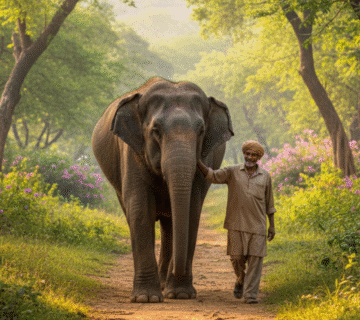
India, with its deep historical and cultural reverence for elephants, is home to a significant population of these majestic giants. Unfortunately, this reverence has often translated into their use in the tourism industry—for temple ceremonies, shows, and, most visibly, for rides at historic sites like Amber Fort in Jaipur. However, global awareness about animal welfare has dramatically shifted the travel landscape. Today, the conscious traveler seeks "Ethical Elephant Tourism," a phrase frequently used but often poorly understood. The term is sometimes used by businesses for "greenwashing"—marketing cruelty as care. ... Read More
Ecotourism & Wildlife Conservation in India: How Elephant Villages Can Be Sustainable Models

Ecotourism & Wildlife Conservation in India: How Elephant Villages Can Be Sustainable Models

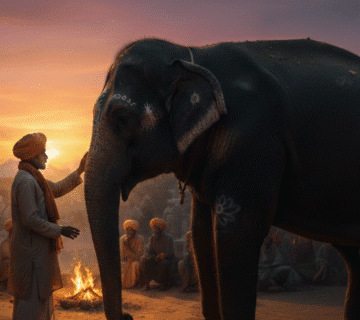
Discover how elephant villages like Hathi Gaon Jaipur balance tourism, animal welfare, and habitat conservation — a true model for sustainable wildlife tourism in India. India is home to over 30,000 Asian elephants, making it one of the most important elephant-bearing nations in the world. Yet, balancing wildlife protection with human livelihoods remains a challenge. Enter Elephant Villages and Sanctuaries like Hathi Gaon (Jaipur) — living examples of how ecotourism and animal welfare can coexist beautifully. ... Read More
Forest Elephants of India: Their Role, Threats & How Sanctuaries Like Hathi Gaon Help

Forest Elephants of India: Their Role, Threats & How Sanctuaries Like Hathi Gaon Help

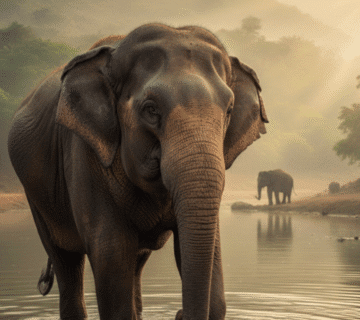
When readers hear “forest elephant,” they often think of African forest elephants (Loxodonta cyclotis)—a species distinct from the African savannah elephant. India, however, is home to Asian elephants (Elephas maximus), specifically the Indian subspecies (Elephas maximus indicus). So what do we mean by “forest elephants of India”? We’re referring to forest-dwelling Asian elephants—the same Indian elephant, but populations that live mainly in tropical and subtropical forests (evergreen, semi-evergreen, moist/dry deciduous), grasslands, and mosaic habitats that include forest edges, riparian belts, and plantations. In short: not a separate species, but the habitat-using populations of India’s Asian elephant. ... Read More
Building a Children’s Nature Journal: Elephant Stories & Activities from Jaipur’s Elephant Sanctuary

Building a Children’s Nature Journal: Elephant Stories & Activities from Jaipur’s Elephant Sanctuary

Family travel can be more than sightseeing—it can be a gateway to empathy, curiosity, and real-world science. In Jaipur, ethical elephant sanctuaries and rescue centers offer a powerful setting for children to learn about gentle giants through observation, storytelling, drawing, mapping, and hands-on nature journaling. This long-form guide gives you a complete, family-friendly framework to design a Children’s Nature Journal around rescued elephants, their natural habitat, and the values of wildlife conservation—before, during, and after your visit. Quick promise: Below you’ll find age-wise activities, printable-ready prompts, field-note templates, sketching and mapping ideas, science mini-lessons, a responsible travel checklist, a CTA to book an ethical experience via our website, and an FAQ section. Everything is SEO-optimized with meta elements and schema at the end. ... Read More
Photography Ethics at Hathi Gaon & Elephant Natural Habitat

Photography Ethics at Hathi Gaon & Elephant Natural Habitat

Visiting India and photographing elephants in their natural habitat can be a once-in-a-lifetime experience. Jaipur’s Hathi Gaon (Elephant Village) is one of the most popular places where visitors can interact with elephants in a controlled, semi-natural environment. But as tourism grows, so does the risk of disturbing these gentle giants if we don’t act responsibly. ... Read More