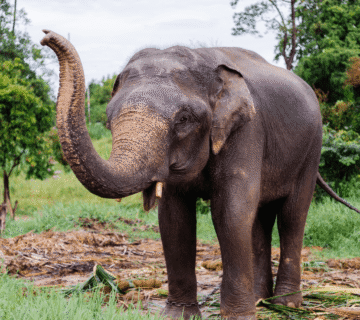
Adult Asian elephant at Hathi Gaon Jaipur lifting its trunk in a natural sanctuary setting with lush green trees.

Hathi Gaon Photography Guide

"For decades, the image of an elephant ascending the ramparts of Amer Fort was the defining postcard of Rajasthan. But travel is changing. Today, more visitors are trading the brief, crowded fort ride for a deeper, more personal connection at Hathi Gaon (Elephant Village). Nestled at the foot of the Aravalli hills, Hathi Gaon is a 30.5-hectare sanctuary where stories of compassion and transformation unfold every day. Created as a rehabilitation zone for elephants and their mahouts, it is a world-class architectural and ecological marvel. For the lens-based storyteller, Hathi Gaon is a rare paradise. It offers the chance to capture authentic moments—from the joyful splash of a morning bath in rainwater-fed ponds to the intimate bond between a mahout and their charge. Whether you are hunting for the perfect 'golden hour' silhouette or a candid portrait of these gentle giants, this guide will show you how to frame the majesty of Jaipur’s elephants with respect and creativity." Key Highlights Included: The Ethical Shift: Moving from traditional rides to meaningful care and conservation. Architectural Beauty: A village designed by world-renowned architects to mimic natural habitation. Optimal Timing: Highlighting early mornings (around 8 AM) as the prime window for bathing rituals and soft light. ... Read More
How to Plan Your First Visit / Booking / Engagement — What to Know

How to Plan Your First Visit / Booking / Engagement — What to Know

Planning your first visit, booking, or engagement with any service provider—whether it's a salon, clinic, wellness center, travel agency, studio, or consulting service—should feel smooth, stress-free, and exciting. Yet many people approach their first appointment with a mix of uncertainty and hesitation simply because they don’t know what to expect. This guide breaks down everything you need to know to plan your first booking confidently. You’ll learn what to prepare, how to choose the right provider, how to make the most of your first visit, and what steps ensure the best possible experience. ... Read More
Elephant Natural Habitat Restoration in India: Case Studies Beyond Jaipur

Elephant Natural Habitat Restoration in India: Case Studies Beyond Jaipur

India’s Asian elephant (Elephas maximus) needs more than just “forests.” It depends on a living mosaic—moist and dry forests, riverine belts, and open grasslands—stitched together by wildlife corridors that let herds move seasonally for food and water. Restoration is therefore not just planting trees; it’s reconnecting broken landscapes, managing grasslands, removing invasive weeds, making roads and railways permeable, and working with communities on coexistence. The country now has 33 notified Elephant Reserves across 14 states, a backbone that guides landscape-level planning and restoration. ... Read More
Elephant Sanctuary vs Safari vs Park: Choosing the Right Experience in India

Elephant Sanctuary vs Safari vs Park: Choosing the Right Experience in India

Planning an elephant experience in India? You’ll see a maze of offers: elephant rides, “sanctuaries,” “elephant parks,” and wildlife safaris. Each promises memories, but they’re not all equal—especially for elephant welfare. This guide breaks down the differences, the ethics, and what to expect so you can choose an experience that’s unforgettable and responsible. ... Read More
Forest Elephants of India: Their Role, Threats & How Sanctuaries Like Hathi Gaon Help

Forest Elephants of India: Their Role, Threats & How Sanctuaries Like Hathi Gaon Help

When readers hear “forest elephant,” they often think of African forest elephants (Loxodonta cyclotis)—a species distinct from the African savannah elephant. India, however, is home to Asian elephants (Elephas maximus), specifically the Indian subspecies (Elephas maximus indicus). So what do we mean by “forest elephants of India”? We’re referring to forest-dwelling Asian elephants—the same Indian elephant, but populations that live mainly in tropical and subtropical forests (evergreen, semi-evergreen, moist/dry deciduous), grasslands, and mosaic habitats that include forest edges, riparian belts, and plantations. In short: not a separate species, but the habitat-using populations of India’s Asian elephant. ... Read More