Building a Children’s Nature Journal: Elephant Stories & Activities from Jaipur’s Elephant Sanctuary

Building a Children’s Nature Journal: Elephant Stories & Activities from Jaipur’s Elephant Sanctuary

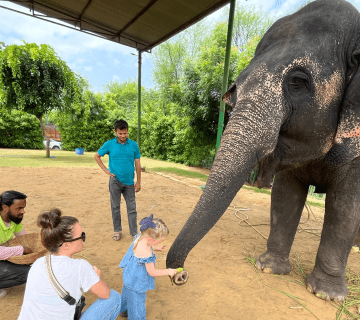
Family travel can be more than sightseeing—it can be a gateway to empathy, curiosity, and real-world science. In Jaipur, ethical elephant sanctuaries and rescue centers offer a powerful setting for children to learn about gentle giants through observation, storytelling, drawing, mapping, and hands-on nature journaling. This long-form guide gives you a complete, family-friendly framework to design a Children’s Nature Journal around rescued elephants, their natural habitat, and the values of wildlife conservation—before, during, and after your visit. Quick promise: Below you’ll find age-wise activities, printable-ready prompts, field-note templates, sketching and mapping ideas, science mini-lessons, a responsible travel checklist, a CTA to book an ethical experience via our website, and an FAQ section. Everything is SEO-optimized with meta elements and schema at the end. ... Read More
Beyond the Sanctuary: Jaipur’s Elephant Village & the Craft Heritage of Sanganer & Bagru

Beyond the Sanctuary: Jaipur’s Elephant Village & the Craft Heritage of Sanganer & Bagru

If you love wildlife and craft traditions, few places deliver a richer day (or two) than Jaipur’s Elephant Village (Hathi Gaon) and the textile hubs of Sanganer and Bagru. This is where ethical elephant experiences—think habitat walks, bathing (where appropriate), foraging, and rescue/rehabilitation stories—meet centuries-old hand-block printing and natural dye practices. The result is a slow, sensory itinerary that supports animal welfare and livelihoods in the same trip. ... Read More

Why Elephants Need Space: Designing Natural Habitats at Hathi Gaon

Why Elephants Need Space: Designing Natural Habitats at Hathi Gaon

Elephants are not just big animals—they are wide-ranging, social beings with deep emotional and cognitive needs. In the wild, they traverse up to 50 kilometers a day, forage mindfully, and live within tight-knit herds. Restricting this natural behavior in captive settings can lead to distress, boredom, and health issues. ... Read More