Wildlife & Nature Spotting

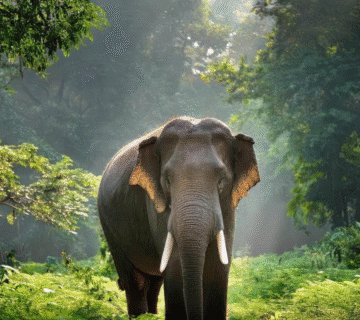
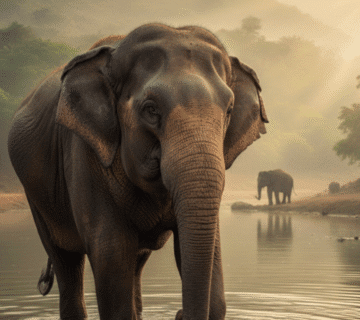
Adult Asian elephant at Hathi Gaon Jaipur lifting its trunk in a natural sanctuary setting with lush green trees.

Hathi Gaon Photography Guide

"For decades, the image of an elephant ascending the ramparts of Amer Fort was the defining postcard of Rajasthan. But travel is changing. Today, more visitors are trading the brief, crowded fort ride for a deeper, more personal connection at Hathi Gaon (Elephant Village). Nestled at the foot of the Aravalli hills, Hathi Gaon is a 30.5-hectare sanctuary where stories of compassion and transformation unfold every day. Created as a rehabilitation zone for elephants and their mahouts, it is a world-class architectural and ecological marvel. For the lens-based storyteller, Hathi Gaon is a rare paradise. It offers the chance to capture authentic moments—from the joyful splash of a morning bath in rainwater-fed ponds to the intimate bond between a mahout and their charge. Whether you are hunting for the perfect 'golden hour' silhouette or a candid portrait of these gentle giants, this guide will show you how to frame the majesty of Jaipur’s elephants with respect and creativity." Key Highlights Included: The Ethical Shift: Moving from traditional rides to meaningful care and conservation. Architectural Beauty: A village designed by world-renowned architects to mimic natural habitation. Optimal Timing: Highlighting early mornings (around 8 AM) as the prime window for bathing rituals and soft light. ... Read More
Season-by-Season Jaipur: When to Visit Hathi Gaon for the Best (and Most Ethical) Wildlife Interaction

Season-by-Season Jaipur: When to Visit Hathi Gaon for the Best (and Most Ethical) Wildlife Interaction

Set near Amer/Amber on NH-248, Hathi Gaon (Elephant Village) is a government-created settlement that houses elephants and their mahouts (handlers) close to Jaipur’s heritage zone. It covers ~30.5 hectares and shifted under the Forest Department in 2017, signposting its welfare orientation. In Jaipur, weather swings are sharp: scorching late spring/summer, humid monsoon, and pleasantly cool winters. These swings influence: • Elephant comfort and behavior (heat load, hydration, bathing frequency, shade seeking). • Your experience (visibility, dust, glare, rain interruptions). • Visitor flow (crowd levels, pricing, and guide availability). Authoritative climate references show Jaipur’s hottest months are April–June (max frequently 37–41 °C; can spike higher), monsoon peaks July–September, and coolest months December–January. Research on Asian elephants underscores their heat sensitivity—they seek shade, bathe, and flap ears to dissipate heat—and that thermal stress affects welfare and activity patterns. ... Read More
Forest Elephants of India: Their Role, Threats & How Sanctuaries Like Hathi Gaon Help

Forest Elephants of India: Their Role, Threats & How Sanctuaries Like Hathi Gaon Help

When readers hear “forest elephant,” they often think of African forest elephants (Loxodonta cyclotis)—a species distinct from the African savannah elephant. India, however, is home to Asian elephants (Elephas maximus), specifically the Indian subspecies (Elephas maximus indicus). So what do we mean by “forest elephants of India”? We’re referring to forest-dwelling Asian elephants—the same Indian elephant, but populations that live mainly in tropical and subtropical forests (evergreen, semi-evergreen, moist/dry deciduous), grasslands, and mosaic habitats that include forest edges, riparian belts, and plantations. In short: not a separate species, but the habitat-using populations of India’s Asian elephant. ... Read More
Jaipur’s Hill Forts & Elephant Sanctuary: Blending Heritage, Asian Elephants & Ethical Wildlife Tourism in India

Jaipur’s Hill Forts & Elephant Sanctuary: Blending Heritage, Asian Elephants & Ethical Wildlife Tourism in India

Jaipur isn’t just a pink-painted city of palaces—it’s a living canvas where Rajput hill forts gaze across the Aravallis and age-old routes still hum with stories. Today, those stories are intertwined with a new chapter: ethical, conservation-minded experiences with Asian elephants near Amer (Amber) Fort—especially around Hathi Gaon (Elephant Village) and carefully vetted sanctuaries. This long-form guide explores the forts’ history and architecture, what “ethical” tourism with elephants should look like, how to visit responsibly, and how your choices can support better welfare and habitat protection. Quick note on terminology: India’s elephants are Asian elephants (Elephas maximus)—not to be confused with “African forest elephants.” In Jaipur you’ll meet captive, human-dependent elephants who live with mahout families; their natural cousins thrive in India’s wild forests and corridors across states like Karnataka, Kerala, Assam, and Odisha. ... Read More
Beyond the Sanctuary: Jaipur’s Elephant Village & the Craft Heritage of Sanganer & Bagru

Beyond the Sanctuary: Jaipur’s Elephant Village & the Craft Heritage of Sanganer & Bagru

If you love wildlife and craft traditions, few places deliver a richer day (or two) than Jaipur’s Elephant Village (Hathi Gaon) and the textile hubs of Sanganer and Bagru. This is where ethical elephant experiences—think habitat walks, bathing (where appropriate), foraging, and rescue/rehabilitation stories—meet centuries-old hand-block printing and natural dye practices. The result is a slow, sensory itinerary that supports animal welfare and livelihoods in the same trip. ... Read More